Wellness Lighting · Human-Centric & Circadian Lighting
Circadian lighting, engineered for the way your body actually responds to it
A deep dive into the science, technology, and health outcomes behind human-centric and circadian lighting.
Explore the Colorbeam wellness pillars | Ultra-Low EMF · Flicker-Free Dimming
What it is
Human-Centric Lighting & Circadian Rhythm
Human-Centric Lighting — HCL — is a design philosophy. It holds that light should be designed around the people living under it, not just around aesthetics or energy efficiency. The most important expression of that philosophy is circadian rhythm optimization: using light to support the body's natural 24-hour biological clock rather than disrupt it.
The two terms are often used interchangeably, and for good reason. HCL is the umbrella. Circadian lighting is what HCL looks like in practice. When Colorbeam talks about human-centric lighting, circadian rhythm is always part of that conversation — because the circadian system is the primary mechanism through which light affects human health, sleep, energy, and hormonal balance.
Your circadian system is essentially a biological clock, synchronized primarily by light. In a natural environment, bright cool daylight in the morning and at midday signals wakefulness and alertness. Warm amber light at sunrise and sunset signals the approach of rest. Darkness triggers melatonin production and sleep. The problem is that most modern homes deliver the same static artificial light at all hours — disrupting these signals and quietly affecting sleep quality, energy levels, mood, and long-term health in ways most people never trace back to their lighting.
Colorbeam was built to solve exactly this. Not by approximating natural light, but by engineering a system precise enough to genuinely replicate it — at the color temperature level, at the wavelength level, and at the directional level. The sections below explain how.
The Technology
Three layers. One complete system.
Colorbeam's approach to circadian lighting isn't a single feature — it's a stack of three technologies that build on each other. Each layer enables the next. Together they produce something no single component could achieve alone.
Layer 01 · Foundation
Tunability — the gateway to everything else
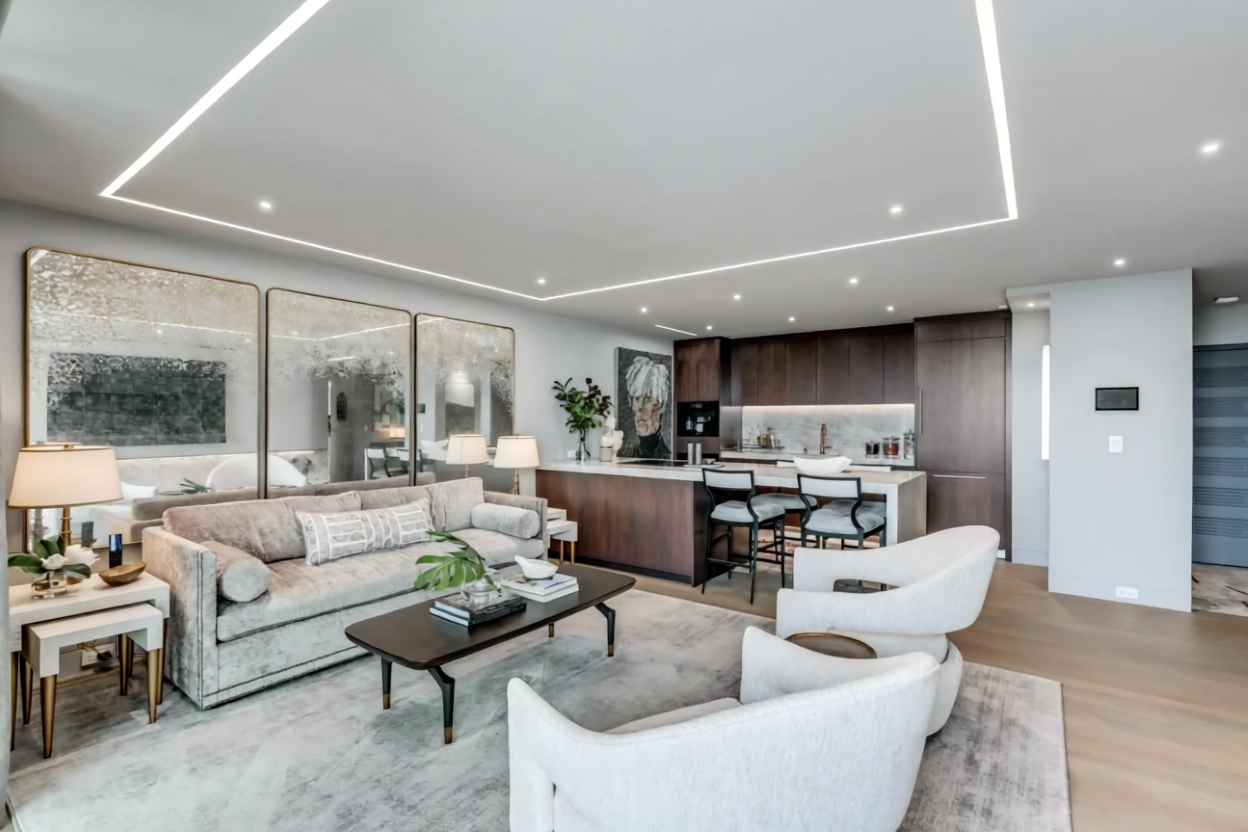
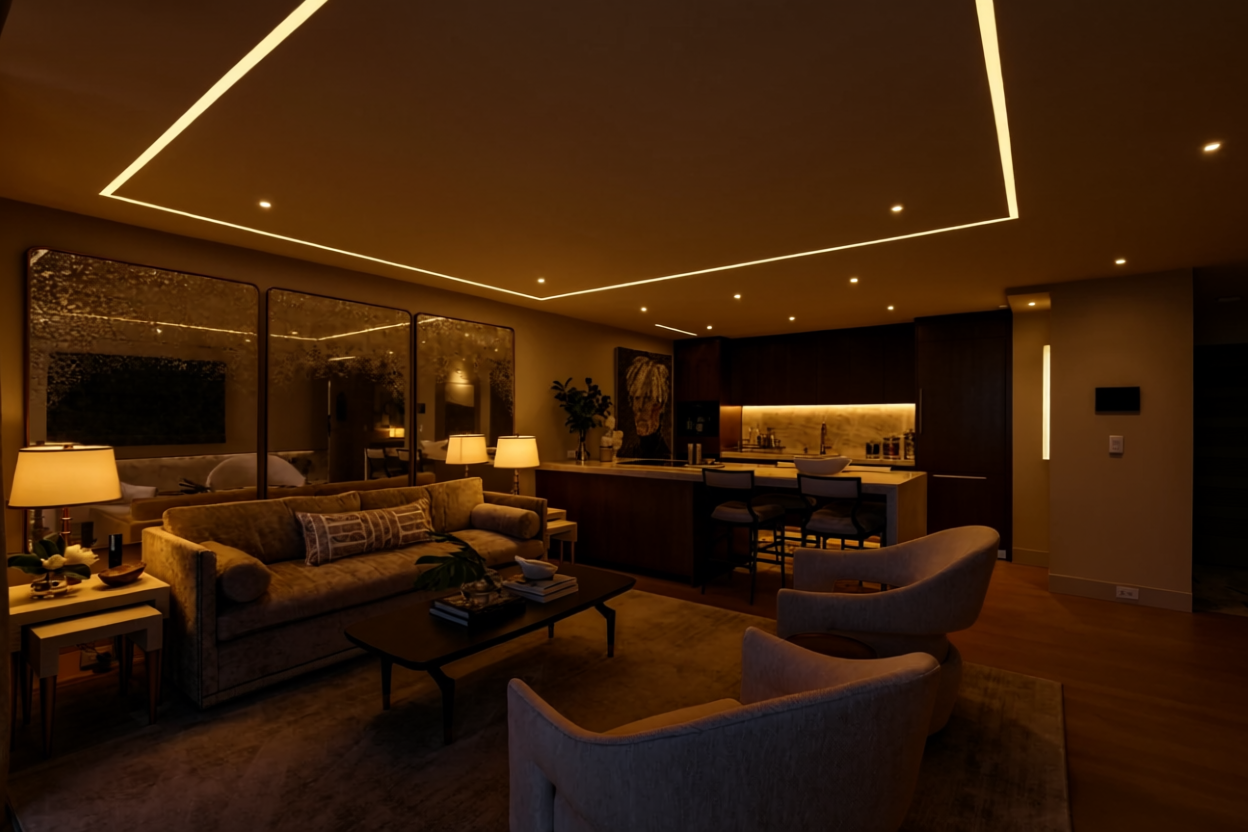
Tunability is the ability to change the color temperature of light — from warm amber to cool daylight and everywhere in between. Without it, no circadian benefit is achievable. Colorbeam's system covers a full range from 2200K to 5000K, with seamless, imperceptible transitions between any two points on that spectrum.
Think of tunability as the instrument. Circadian lighting is what you play on it. The range matters because different points on the spectrum have very different biological effects — 2200K in the evening allows melatonin to rise naturally, while 5000K at midday signals peak alertness to the same system.

Layer 02 · Application
Circadian lighting — tuned to the rhythm of your day
Tunability is the tool. Circadian lighting is how Colorbeam uses it. A properly configured Colorbeam system shifts color temperature throughout the day to mirror the natural light arc of the sun — warm amber tones in the morning and evening to support melatonin production and signal rest, bright cool daylight at midday to signal alertness and wakefulness. The transitions are imperceptible. The system adjusts continuously, responding to the time of day, so the biological signals your body expects are present without you ever touching a control.
Circadian design also accounts for the direction of light — a dimension of the science that goes beyond color temperature. Research shows that the human body doesn't just respond to the color of light, it responds to where that light comes from. Horizontal light at eye level, the way sunlight appears at sunrise and sunset, signals rest and transition. Overhead light at midday signals peak wakefulness. Colorbeam systems can be designed with this directionality in mind, so the architecture of light in your home mirrors the geometry of the sun throughout the day — not just its color.
Layer 03 · Precision
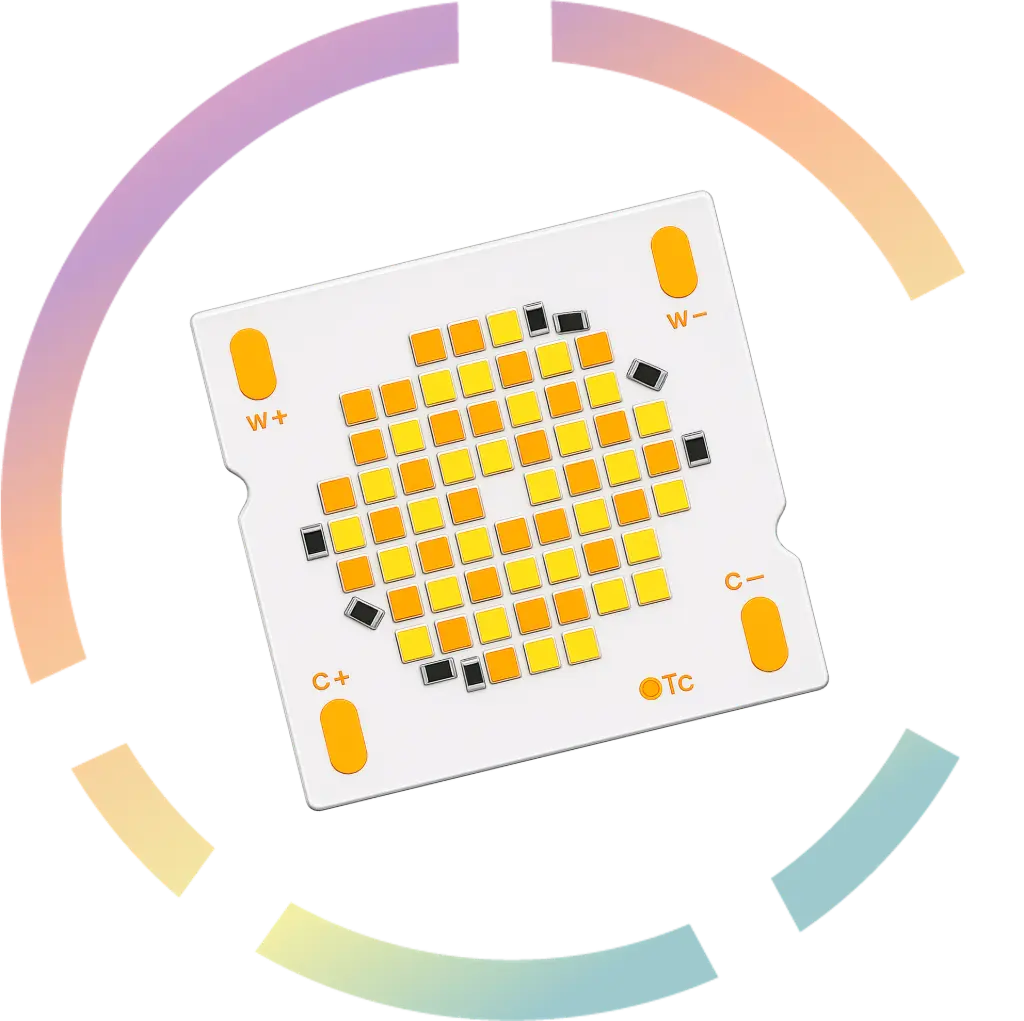
The HEKA chipset — wavelength-level biological precision
Tunability changes how warm or cool the light looks. The HEKA chipset changes what the light actually does at a biological level. It controls the specific nanometer wavelengths of light emitted — not just the overall color temperature — in a way that has been shown to directly influence melatonin production, cortisol regulation, and the body's internal clock.
Developed in collaboration with leaders in the scientific community, the HEKA chipset addresses four specific limitations of conventional LED technology. Its melanopic spectral content is optimized at 680nm — the wavelength range most directly linked to melatonin regulation — while eliminating the spectral dip through the introduction of cyan, correcting what makes standard artificial light feel wrong to the nervous system. The red region of the spectrum is significantly enhanced, achieving an R9 color rendering score of 97 compared to 80 in a standard chip, for superior color fidelity and skin tone rendering. Critically, all of this is achieved without introducing violet or UV wavelengths — biologically precise without compromise.
What changes
How circadian lighting changes daily life
The technology exists to serve the person living under it. Here is what that actually looks like — not in theory, but in the rhythm of a day lived in a home where the light is working with your biology rather than against it.
The Science
The science behind circadian lighting
The following peer-reviewed studies directly support the science behind Colorbeam's circadian lighting approach. Each citation includes a plain-language summary of what the research found and why it is relevant — and a direct link to the full paper.
Ready to go further
See what circadian lighting looks like in your home
Every Colorbeam installation is custom designed around your home, your lifestyle, and your biology.